
Meta released the Muse Spark Open weights and calls it the most capable American open model at launch. It is a native multimodal net: 816 billion parameters in total, 42 billion active, a million-token window. The tuning is code, agents, long jobs — not a short chat.
Where to run it
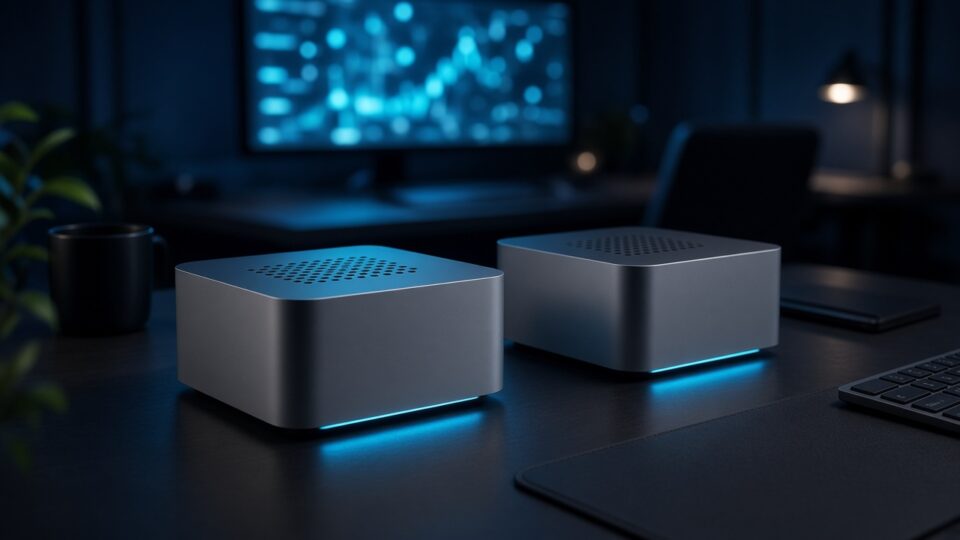
Weights sit on Hugging Face, SageMaker, Model Garden and Foundry. APIs: Baseten, Fireworks, Groq, Modal, Nebius, OpenRouter, Together. Engines: vLLM, SGLang, TensorRT-LLM, MLX, llama.cpp, Unsloth. Meta separately boasts two Apple M5 Ultra Mac Studios: unified memory up to 512 GB per machine, two chassis as a terabyte of “one” memory, a 1.2 TB/s link. On that stack it wires Muse Code: edits in the Ice Cubes iOS client and frame-by-frame cuts in DaVinci Resolve.
For NVIDIA and AMD it promises its own Helion kernels in SGLang with 1.03–3.95× kernel speedups. The Muse Model License has limited commerce: free for many developers.
Caveats
“Strongest US open-weight” is Meta’s wording, not an LMSYS table. Two Mac Studio Ultras are not a “home PC”; that desktop costs like a rack. Open weights carry risk; the company writes about extra safety post-training and thresholds in its own Superintelligence Scaling Framework.
How to look at it
This is a move against closed labs and Asian open giants: American weights, agent code, not only the cloud. It matters if you already hold a local stack and can digest hundreds of gigabytes. Everyone else can use the API. Watch whether the model holds a long refactor without a nanny, not the slogan “superintelligence on a desk”.